The Pianist As Artist
- Composer
- Performer
- Teacher
- College and/or University Technician
- Performance and Concert Service
- Voicing
- Tuning
- Tone Regulation
- Action Regulation
- Hammer Selection
Essential to Piano Technology?
Those claiming to be expert in understanding the piano should most of all be able to play the piano with some facility, the most inexorable aspect of piano expertise in providing a comprehensive knowledge of the piano from all aspects, be it woodworking, engineering, or art. Make no mistake. Some might be astounded to realize just how unusual this contention is within the field of piano technology to-day. It is, rather, considered superfluous not only within the field, but for many of the artists the piano technician works with. It is bound to cause insecurities concerning general working knowledge of the piano on both fronts. How did playing and fixing the piano become mutually exclusive ways to demonstrate understanding?
Until the mid-19th century, the maintenance and the use of the piano were not mutually exclusive things. In fact, the first piano is generally thought to have been built sometime in the last decade of the 17th century. So for little under half the life of the piano when the majority of R&D took place, the first half, there were no piano technicians, all while so many specialists in the field today wonder why R&D ceased.
Piano could continue to develop, but without an integrated approach like that proposed here, it will continue to stagnate in its development. The use and maintenance of pianos must again be unified for the piano industry to thrive again.
Aural vs. Visual Tuning
For similar reasons, a revolution no less powerful than rap has happened in piano maintenance and tradition, and that is the movement toward use of Electronic Tuning Devices, a term today eclipsed by AI, or Digital Tuning Devices. In a matter of a quarter century, it is generally observed, though no hard data has been conspicuously presented, tuners have swung from 90% aural to 90% visual. This is a development disparaged for many reasons by PianoOnMyMind, for one, because tuning is to be understood as part of the art, not the engineering, of the piano.
This is not to claim that those who tune aurally will make more money, or do more business. It is most certainly in many cases otherwise. This is not to claim that there are not bad artists tuning pianos aurally, and on the other hand, good engineers tuning pianos visually. This is to assert that the path to excellent piano work and artistry in the piano industry is that trod by the aural piano tuner, furthermore, that it is the responsibility of every piano teacher to understand the role that must play in promoting the live music experience, opposed to sampling, and recording, as represented by digital pianos, and tuning with ETDs. How is it that our pedagogy will benefit a piano industry and community devoted to the microphone, sampling, and recording, not the live music experience?
The Problem with Hertz and the Art of Tuning
The presumption that tuning is an art requires a number of considerations. What is Art? The very query immediately breeds contention, as that the first person to unequivocally ask it in recent past, Leo Tolstoy, in the Orient, not the Occident, could not ask it in an Oriental language, being Russian, and was forced to publish his book under this rubric in an Occidental language, English, initially, the man credited for writing one of the longest novels ever, War and Peace.
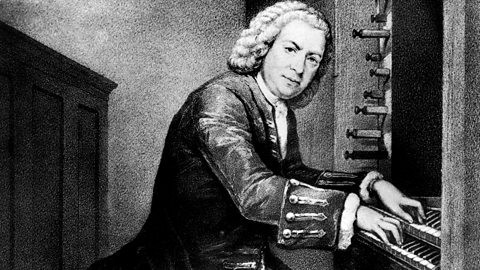
For the most part in tuning, what governs this question about the art of tuning remains instead the democratic and revolutionary ideas of Kant, in The Critique of Judgment, is popularity. For something to be art, it must be popular, and the ability to define it one must be, Romantic; it requires celebrity, the Cult of Personality. A celebrity tuner can use a Kirnberger temperament he or she could not even do aurally, with a dumb phone, on an instrument that did not even exist in the days Johann Kirnberger invented his temperament, a Steinway D, who studied composition with JS Bach, a composer who invented a tuning method used to this day by the futurists and the dumb phone. This requires celebrity, not any extensive knowledge of tuning.
Today, the art of tuning demands not that one be scholarly, well-informed, published, correct, but that it be Kitsch, Futuristic; governed by the machine, i.e., popular. AI. The Manifesto of Futurism, created by Filippo Tommaso Marinetti, establishes a platform that promotes Violence, and sublimates Speed above all else, Speed, rage and the machine, the apology for dumb phone tuning most of all, and never bothering to take the time to learn anything about tuning.
Rather, aural tuning must be a practiced art; or in the words of Hippocrates at the beginning of his Aphorisms, "art, is long". It is not fast. It requires, least of all, speed. It does take years of practice, and every dumb phone tuning exemplifies a lost opportunity, to practice. It is like learning a piano piece for the first time. You start by practicing slowly.
There are 2 names we might be directed to, Heinrich Hertz, and Hermann Helmholtz, on this question. Hertz most significant discovery was not the fundamental vibration of a string and its frequency represented by number in vibrations per second, but radiowaves, his proof that electromagnetic waves existed from the equations Clerk Maxwell had predicted with the Capacitance Loaded Dipole Resonator. Without these discoveries, cellphone towers would not exist. The appellation of Hertz is also used as a measurement for the frequency of a light bulb, i.e., how many times it turns on and off per second. Hertz wrote his Doctoral Dissertation about Tone under the supervision of Helmholtz, who wrote the famous Sensations of Tone.
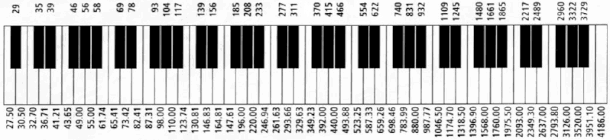
Google “pure tone,” and “missing fundamental.” These are the foundation of equal temperament. Juggling the role of both fundamental and natural harmonics, the harmonic series, with the piano, forces one to abandon the frequency of numbers attributed to the research of Hertz that the numbers attributed to him suggest. Why?
When you play a three valved brass instrument, the reason in the primary range of the instrument that you can jump a fifth without changing the fingering is that you are jumping from the second to the third interval in the harmonic series. When you play a string instrument, the reason you jump an octave when touching the string lightly halfway between the termination of the string on either side is that you create a termination that excites the second partial in natural harmonics. The phenomenon indicates that harmony has physical properties and that a physics of acoustics created this, that harmony did not get invented by man or randomly occurred. All Hertz did was evaluate the fundamental sound of the string, which did not provide us with a numerical value for pitch; harmony is more complex. While the fundamental will sound correct itself without any other notes, once you play an interval, it will be out of tune.
Other than the fundamental Hertz evaluated nothing. His numbers don’t work due to the string tension of the modern piano made possible by the iron string frame, which excites the tone production of higher harmonics, or partials, that render the fundamental to be ineffective in producing harmony. Piano technicians frequently call this inharmonicity. The moment you play an interval, which more than any other instrument, piano gave the musician the possibility of doing, as in many ways as we have fingers, the frequency represented by the number, with the exception of perhaps, 440, is useless.
IOW, there is no computer precision in tuning. There are no numbers to go by. We gain nothing with the numbers Hertz produced on a piano; therefore, the capacity for error is not eliminated by using a machine as that no number can be affixed to pitch in a piano. Yet this myth continues to drive the illusion that we cannot be more precise by simply using the ear.